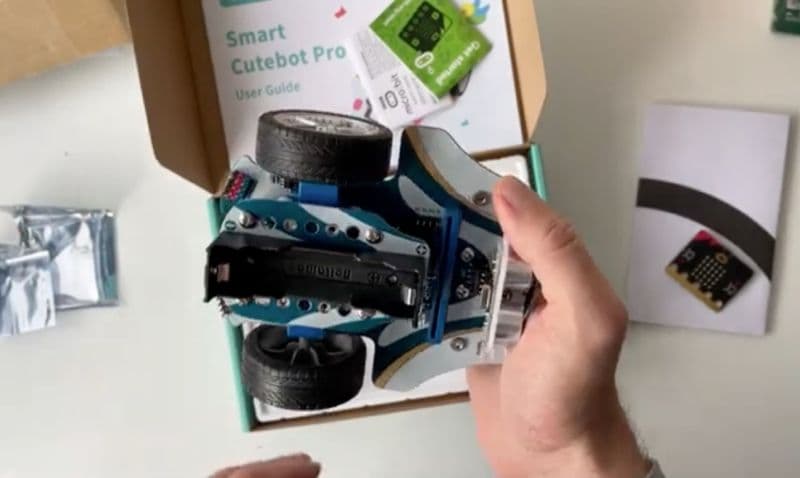
Need help choosing?
Our team can recommend the perfect kit for any age or skill level.
Expert facilitators from Robotixkids deliver programmes at your school
Training platform and resources from Inspire Africa
Multi-learner STEM kits with bulk pricing for schools
Online STEM courses on the Inspire Africa platform
Looking for something else?
View all our education solutions and find the right fit for your school.

Brand: ELECFREAKS
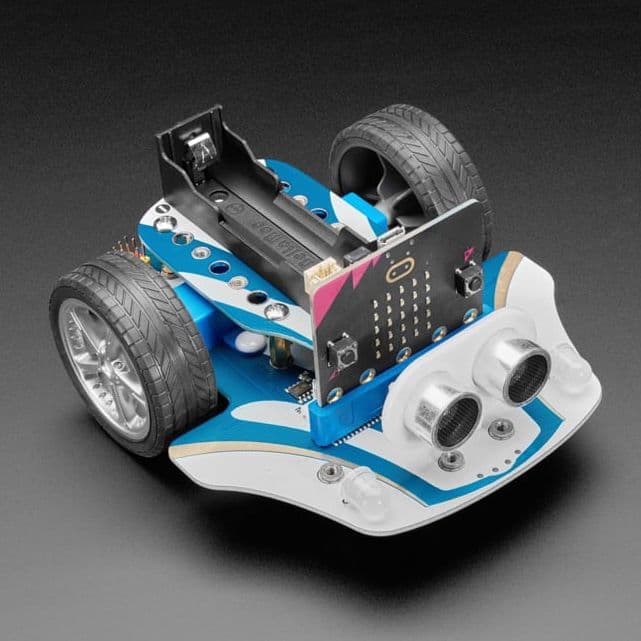
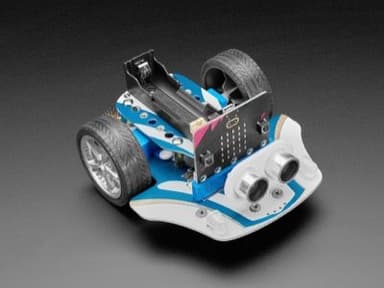
The robot car that grows with your child — from first code to autonomous navigation
Complete your purchase:
Age
8+
Batteries
1 x 18650 (flat top) (not included)
Projects
19 tutorial cases
Guide
Printed user guide
Soldering
Not Required
Coding
MakeCode & MicroPython
Most robot cars for kids stop at basics. The Cutebot Pro is built to go further.
Your child writes code that physically moves, senses, and responds in the real world — not just on a screen. There's nothing quite like watching a robot you programmed dodge an obstacle.
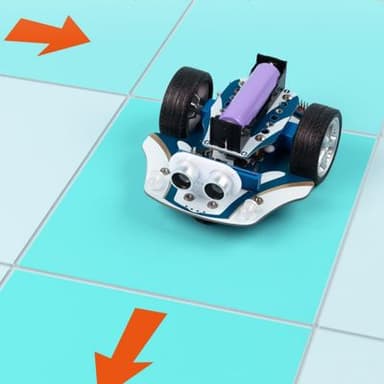
Encoder motors measure exactly how far and how many degrees the robot has turned. Your child can programme it to drive a perfect square, navigate a grid, or follow a line using the same algorithm that guides real autonomous vehicles.
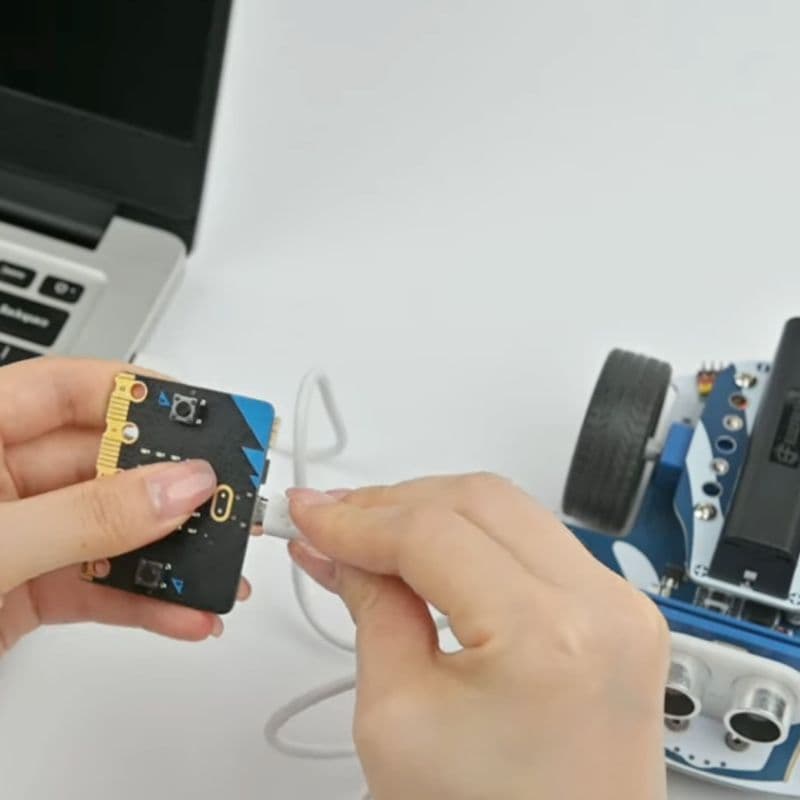
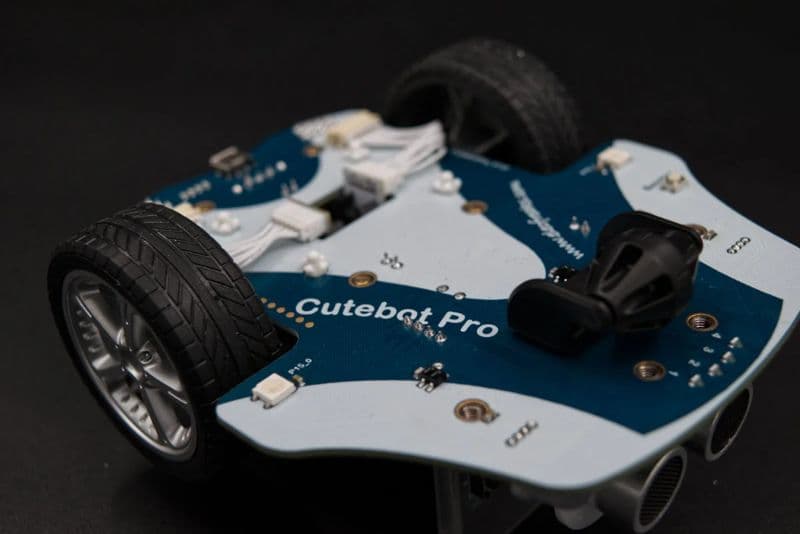
Start with block coding in MakeCode and progress to Python text code. Add a claw, build a forklift, or connect an AI camera module. The Cutebot Pro is a platform that grows with your child for years.

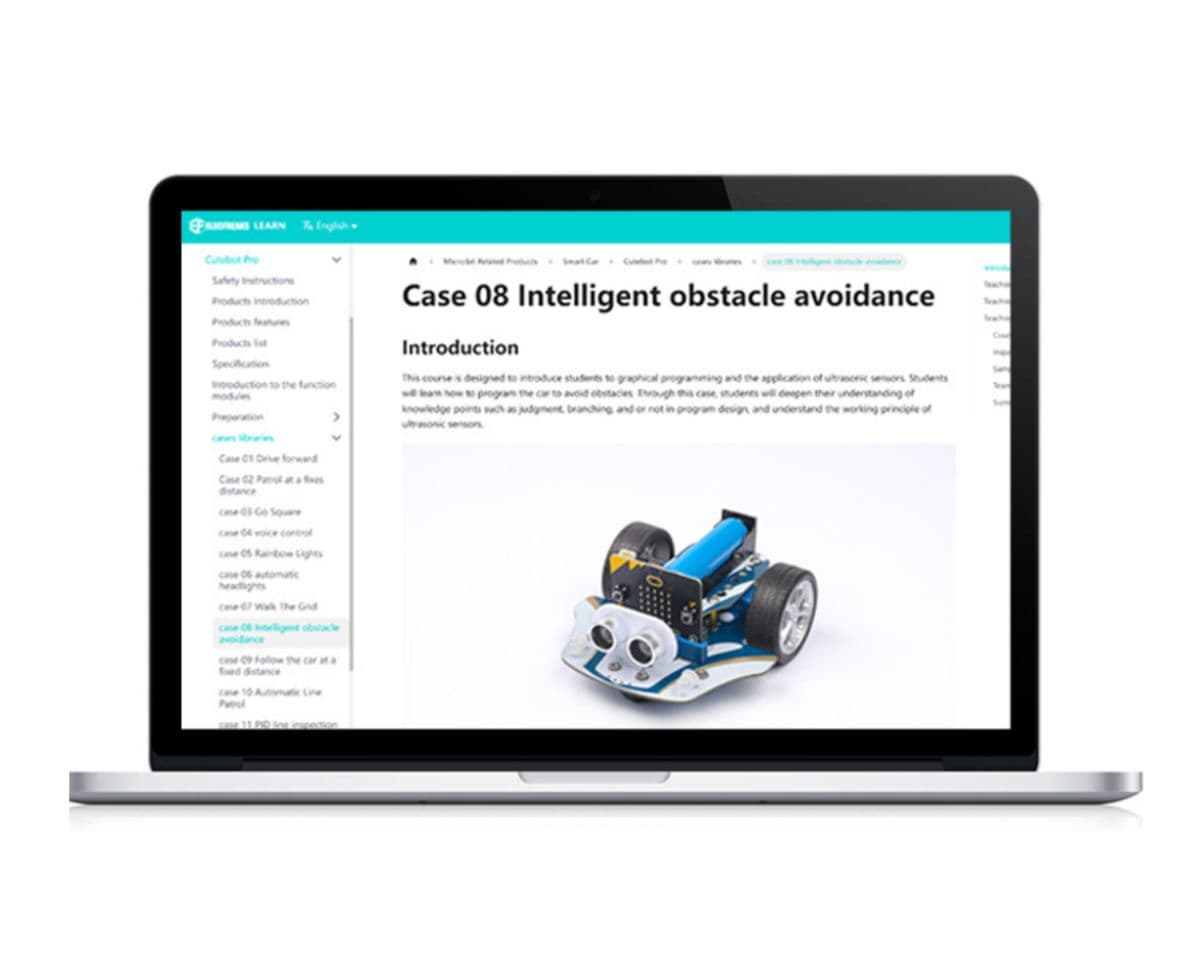
The 19 official tutorial cases are designed to build on each other. Your child starts by programming the robot to drive forward, then gradually takes on more complex challenges — controlling exact distances, responding to sound, following lines, and finally implementing a real PID control algorithm. Every step has sample code and clear explanations on the free ELECFREAKS wiki, so they can learn independently without needing you to be a coding expert.
Engineered for learners who are ready for more than basic driving.
Precise control of distance and turning angle — your child can programme the robot to drive exactly 50cm or turn precisely 90°. This opens up grid navigation, geometric paths, and accurate autonomous driving.
Four infrared sensors detect complex intersections like crossroads and T-junctions. They also unlock PID line inspection — a real-world algorithm used in robotics and automation.
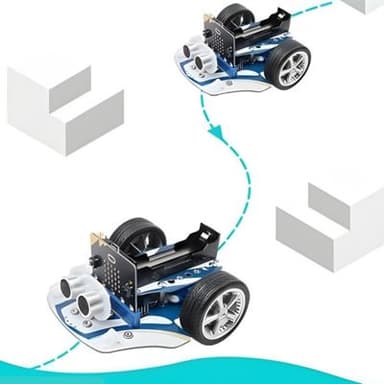
Measures distance to objects in real time, enabling autonomous obstacle avoidance and follow-me behaviour. The same technology used in parking sensors and self-driving cars.
Built-in 18650 battery box charges via any USB cable in about 2 hours. No disposable batteries ever needed — just plug in, charge, and keep coding.
Control by Bluetooth, infrared remote, Joystick:bit gamepad, or by tilting a second micro:bit. Your child can start with a remote and work up to fully autonomous programmes.
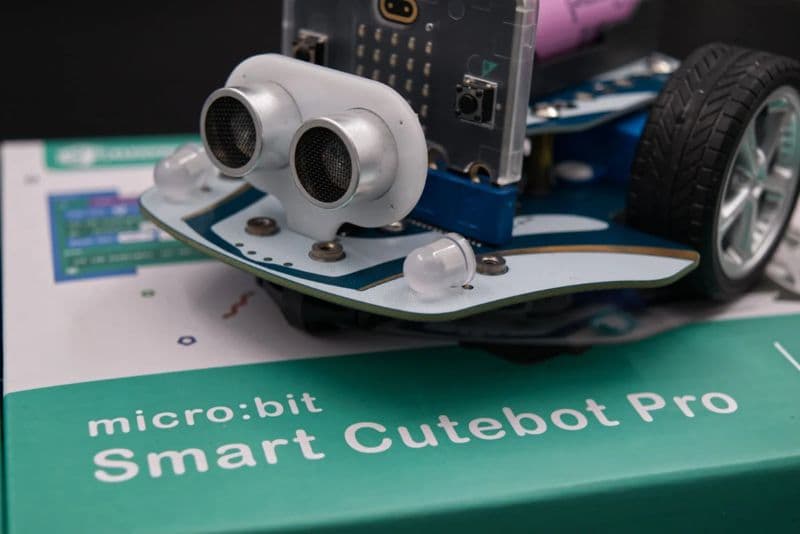
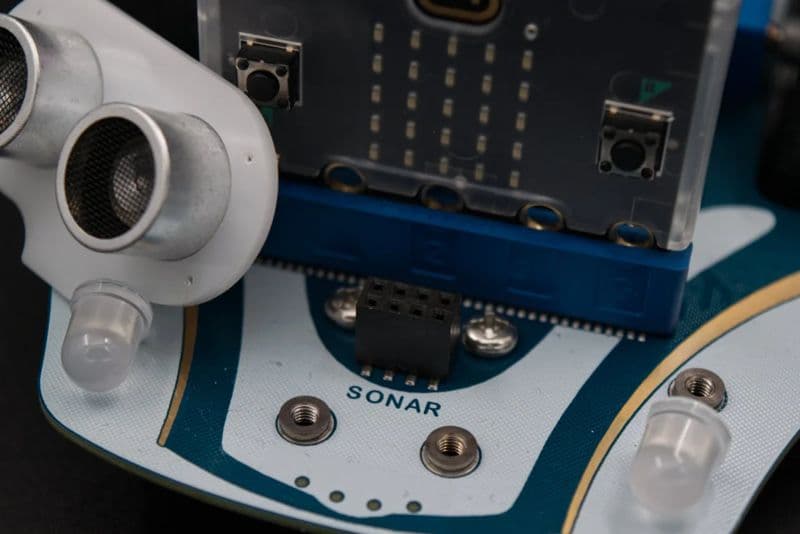
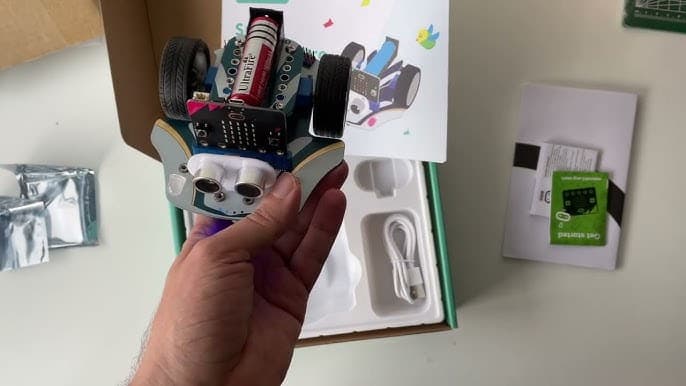
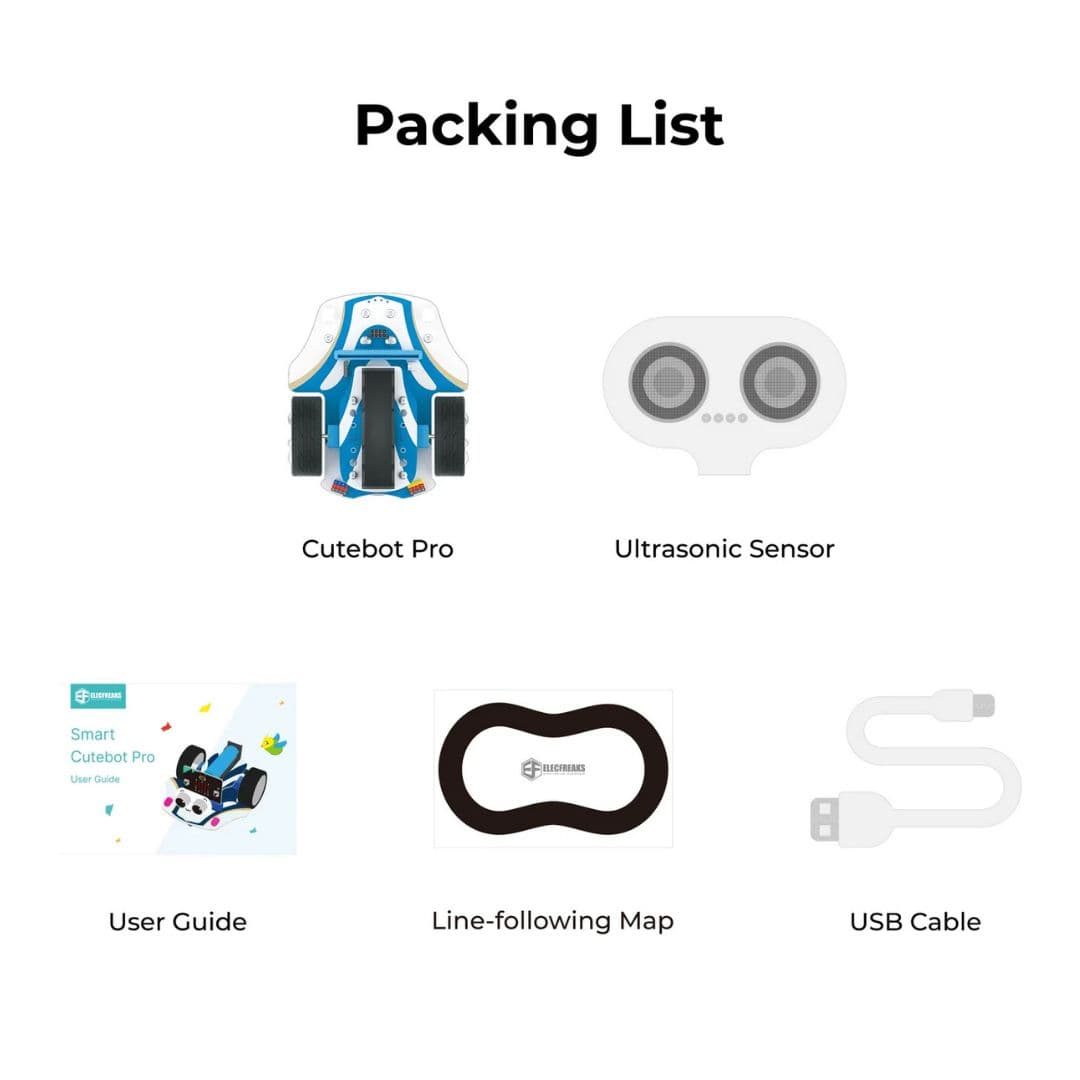
No building required — attach the ultrasonic sensor, add the battery, and start coding in under 10 minutes. The focus is on programming, not assembly.

Four servo ports, four GPIO outputs, an I2C connector, and mounting holes for building blocks make the Cutebot Pro a proper platform. Your child can attach a mechanical claw to pick up objects, build a forklift with Lego-compatible blocks, connect an AI camera to recognise road signs, or create a ball-launching vehicle. These aren't hypothetical — ELECFREAKS provides complete tutorials for every one of these builds. When your child runs out of challenges, there's always a next level.
From 'Drive Forward' to autonomous obstacle avoidance and AI vision
The core projects progress from basic motor control to advanced sensor integration. Here are six that show the range.

Write your first programme to move the robot forward at a set speed and duration.
Learn: Motor control, speed, timing

The robot responds to clapping or noise — louder sounds make it go faster.
Learn: Sensor input, conditional logic, real-time data

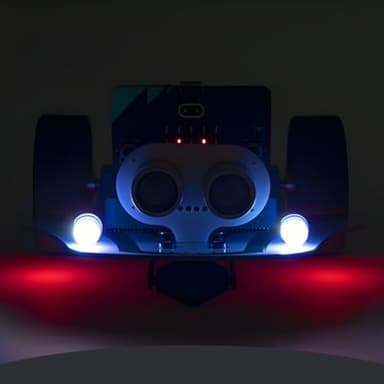
Programme dynamic colour effects across the onboard RGB LEDs while the robot drives.
Learn: RGB control, colour theory, synchronisation

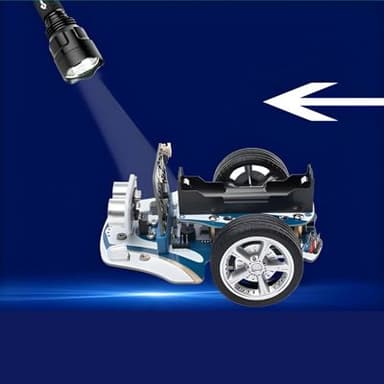
The robot uses its light sensors to detect a light source and steer towards it.
Learn: Light sensing, conditionals, sensor-driven navigation

The robot detects obstacles with its ultrasonic sensor and steers around them autonomously.
Learn: Ultrasonic sensor, autonomy, decision-making
Advanced smooth line-following using a proportional-integral-derivative control algorithm.
Learn: PID algorithm, 4-way sensors, parameter tuning
Plus 13 more projects including Automatic Headlights, Follow the Car at a Fixed Distance, Walk the Grid, and extended builds like a Mechanical Claw, Forklift, and AI Road Signs Cart
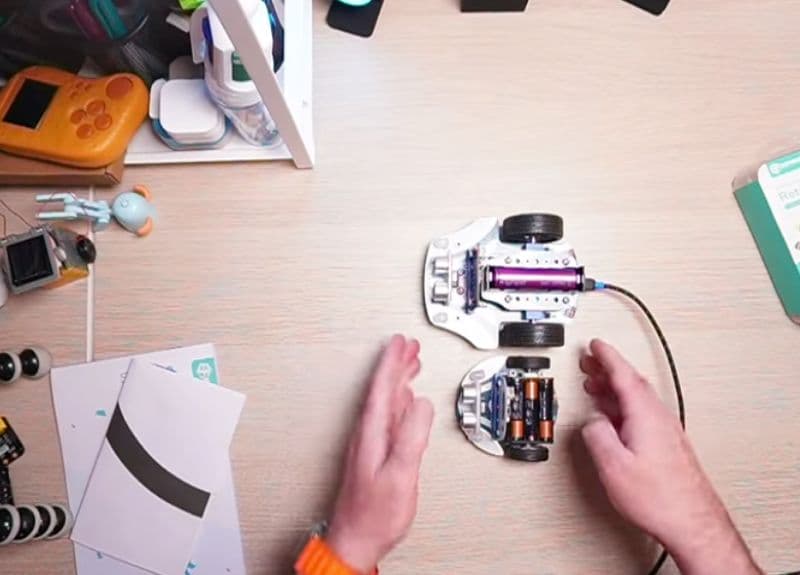
Real builds from real learners.


| Dimensions | 132 × 114 × 50 mm |
| Weight | 138 g |
| Compatibility | BBC micro:bit V1 & V2 |
| Motor Type | N20 metal-geared encoder motors, 300 RPM max |
| Line Sensors | 4× infrared (supports PID line inspection) |
| Distance Sensor | Ultrasonic HC-SR04+ |
| Lighting | 4× RGB LEDs (2 headlights + 2 NeoPixel underlights) |
| Wireless | Bluetooth + infrared receiver |
| Battery | 18650 Li-ion, 2000 mAh (not included) |
| Charging | USB, ~120 minutes |
| Expansion | 4× servo ports, 4× GPIO, I2C, extra DC motor output |
| Programming | MakeCode (blocks) & MicroPython (text) |
| Soldering Required | No |
| Assembly Required | Minimal — sensor and battery only, no tools needed |
19 guided projects. Precision motors. A platform that challenges your child for years.